Injury & Rehab
Loading A Healing Tissue And The Principle Behind Rehab
Rehabilitation works by applying enough mechanical stress to direct repair without exceeding what the healing tissue can tolerate, which makes dose the central problem.
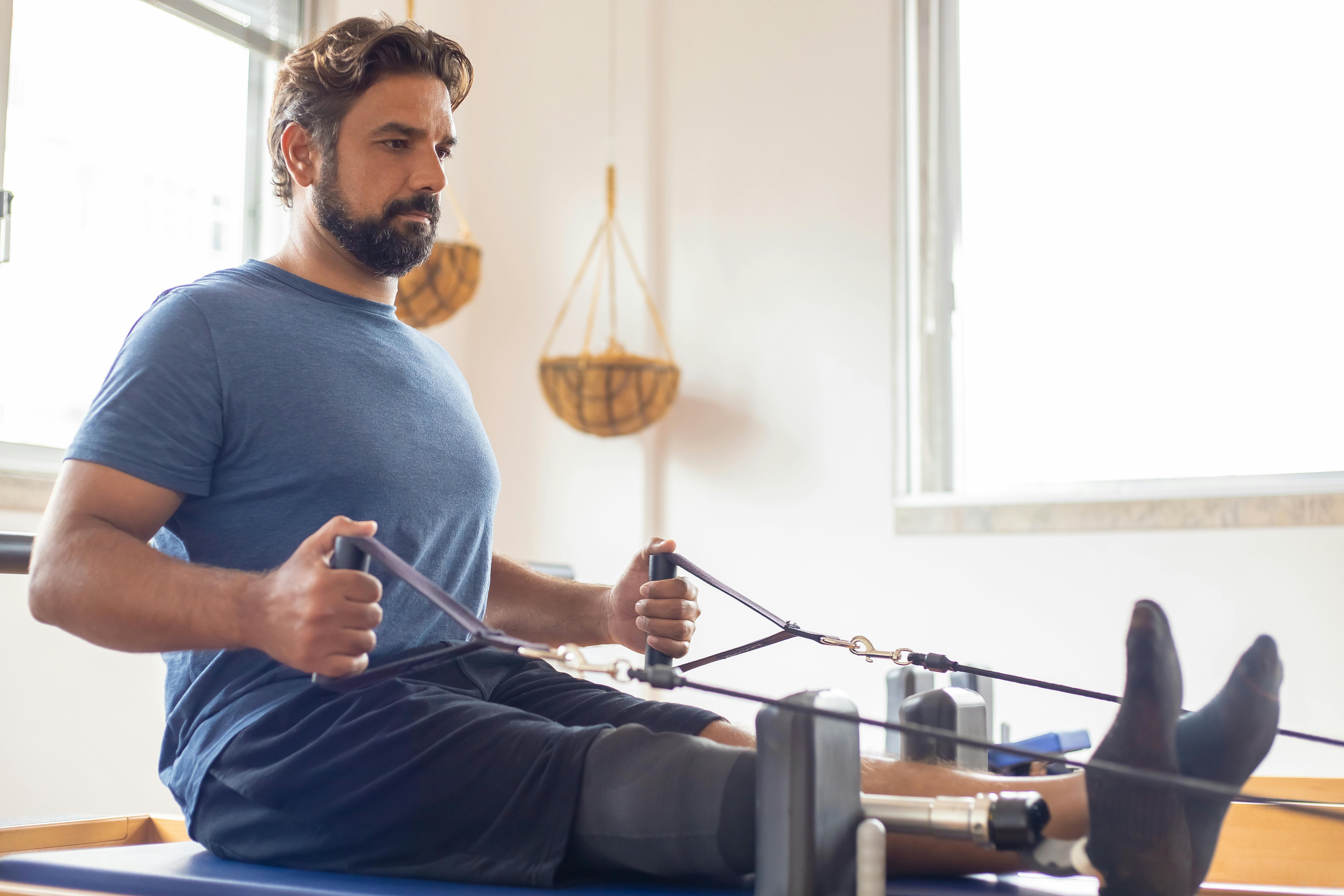
Rehabilitation is often presented as a list of exercises. The exercises are secondary; the organising principle is that healing tissue responds to the load it receives.
Tissue organises along lines of stress
Repair lays down new collagen initially in a disorganised arrangement. Mechanical loading during remodelling orients those fibres along the direction of the force applied.
Tissue that heals without load remains less well organised and tolerates less force when normal activity resumes. Complete rest therefore has a cost that appears later.
This is the reason early controlled movement has replaced prolonged immobilisation for most soft tissue injuries, though the exceptions are real and clinically determined.
Dose sits between two failures
Too little load leaves the tissue under-stimulated and the surrounding muscle deconditioned. Too much re-irritates the area and resets the process.
The tolerable range is narrow early and widens as healing progresses, which means the correct dose on any given week is a moving target.
Judging that target is the skill a clinician brings, and it is why generic rehabilitation protocols perform worse than supervised progressions for anything substantial.
The response is judged after the session
Pain during a rehabilitation exercise is a poor guide on its own, since tolerable discomfort is often acceptable and sometimes necessary.
The more informative measure is how the area behaves in the following day, and whether that response settles within a reasonable window.
A symptom increase that resolves by the next session generally indicates the dose was near the limit rather than beyond it. One that persists for days indicates otherwise.
Load has more variables than weight
The stress on a tissue depends on the weight, the range used, the speed, the number of repetitions and the frequency across the week.
Adjusting range or speed often allows the tissue to keep working when weight has to be reduced, which preserves the stimulus rather than removing it.
Isometric holds, partial ranges and reduced tempo all serve this purpose, and their role is to keep the tissue loaded while altering the demand it faces.
The surrounding system deconditions faster
Muscle around an injured joint loses size and force capacity within weeks, and that loss is frequently larger than the original injury's contribution to the problem.
Rehabilitation therefore addresses two things at once: the healing structure and the capacity lost while it healed. Neglecting the second produces a joint that hurts under normal load.
Where an injury involves a joint, a nerve, or does not follow the expected trajectory, assessment by a clinician is the appropriate step rather than a longer progression.