Injury & Rehab
The Difference Between Acute And Overuse Injuries
Acute injuries arrive from a single event and overuse injuries accumulate from repeated loading, and the distinction changes how each is identified and managed.
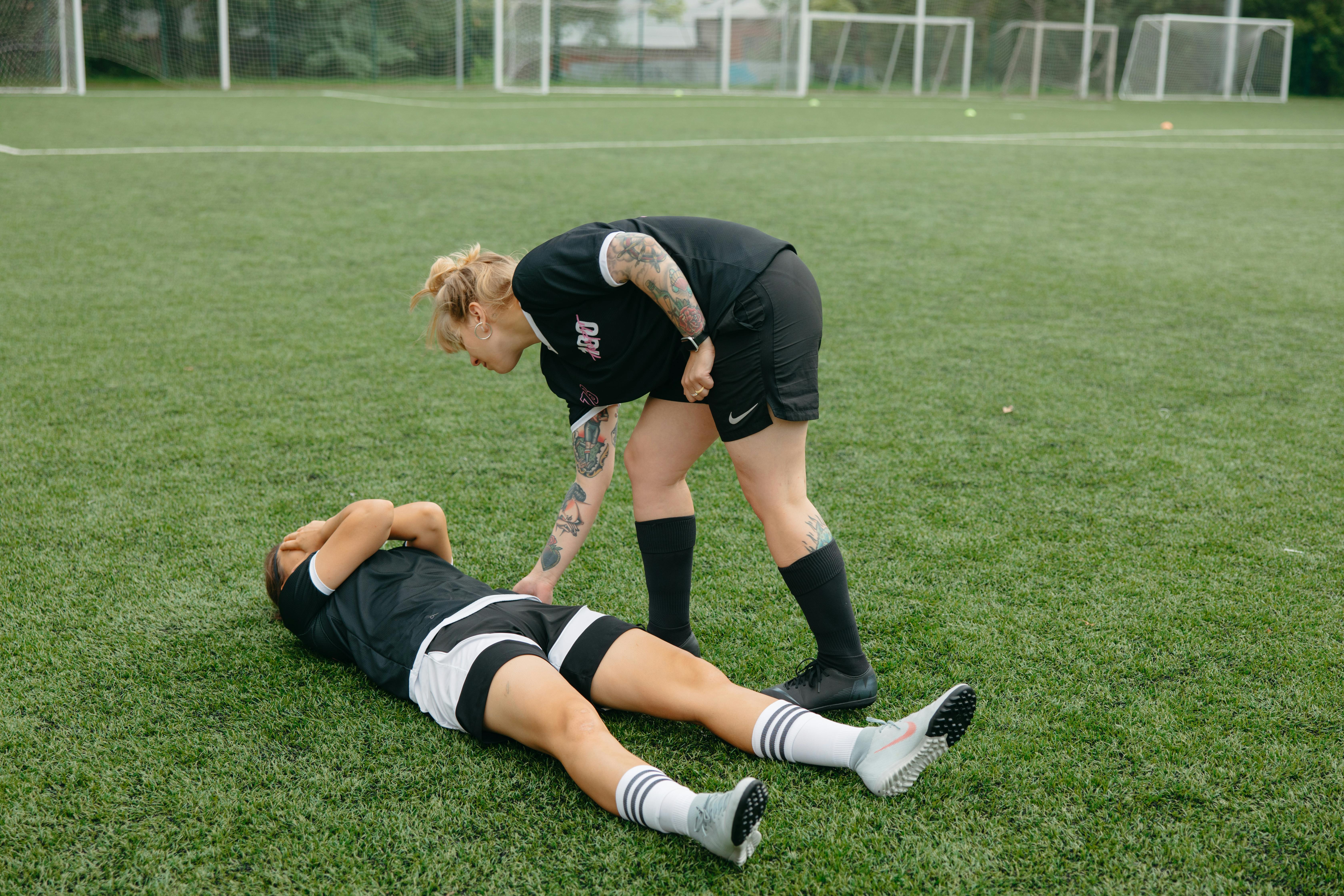
Injuries in training divide into those produced by a single event and those produced by accumulated loading. The two behave differently enough that treating them as one category leads to poor decisions about both.
What defines an acute injury
An acute injury has an identifiable moment. The person can usually name the repetition, and there is often an audible or felt event at the time.
Mechanically it represents a load exceeding tissue tolerance in a single instance, whether because the load was high or the position placed the tissue at a disadvantage.
The presentation is typically immediate: pain that starts at once, often with swelling developing over the following hours.
What defines an overuse injury
An overuse injury has no single moment. It emerges gradually, and the person usually cannot say when it began, only when it became inconvenient.
The mechanism is repeated loading that exceeds the rate at which tissue can adapt, so the balance between damage and repair tips slowly in one direction.
The characteristic pattern is pain that appears at the start of activity, eases during it, and returns afterward, which is why it is often dismissed early.
Why overuse injuries hide
Because they develop slowly, the level of discomfort at any point is small, and the comparison a person makes is with yesterday rather than with a month ago.
They also frequently improve with warm-up, which makes the session feel like evidence that nothing is wrong.
The trigger is rarely the total load and more often a change in it, so a period of increased volume, frequency or a new movement is usually visible in the history.
Different questions in management
An acute injury raises a question about tissue integrity, which is why the initial concern is whether a structure has failed and whether imaging or examination is required.
An overuse injury raises a question about load management, since the tissue is intact and the balance between demand and adaptation has drifted.
That is why graded loading features so heavily in the management of overuse problems, while acute injuries have a period where protection precedes loading.
Where the categories overlap
An acute event frequently occurs in tissue already compromised by accumulated loading, so the two mechanisms are not mutually exclusive.
Stress injuries in bone sit in between, developing gradually and sometimes ending in a discrete fracture, which is why they are missed so often.
Either category warrants assessment by a physician or physical therapist when pain persists, worsens, or is accompanied by swelling, instability or loss of function.